4204 Glencoe
CORE AND SHELL OFFICE BUILDING
LOCATION: LOS ANGELES, CA
Executive Architects: House & Robertson Architects Inc; Dave Hollister, Saul Archila, Jim House, Eric Goldberg,
Design Architects: RIOS; Mark Moto; Sean Gaffney, Naseema Nasif, Yessenia Juarez
Structural Engineers: Holmes Structures; Nina Mahjoub, Jose Machuca, Austin Perrin
Landscape Architects; RIOS; Jason Shinoda, Colin Gast
MEP Engineers: ARC; Hisham Barakat, Charles Wang, Alex Lubomirsky
Contractor: Morley Builders; Ryan Hupf, Matt Montijo, Denis Rivera, Matt Albus, Sherman Sherpherd, Diego Ramirez, Isabelle Coralles
Construction Manager: Lincoln Property Management; Troy Meldrum, Annie Tevetian, Brian Stock, Casey Reilly, Alan Lee, Stephen Lindgren, Natt Howell
Civil Engineers: John Labib & Associates; Kyle Prouty, John Labib, Will Smith
Low Voltage: David Plunkett
Lighting Designer: Cynthia Liang, Maura Reinhart, Tina Aghassian
Fire Life Safety Consultant: Holmes Fire; Richard Mellish, Alyson Blair
Facade Access: Olympique
Signage Designer: RIOS; Mario Salazar, Misato Hamasaki
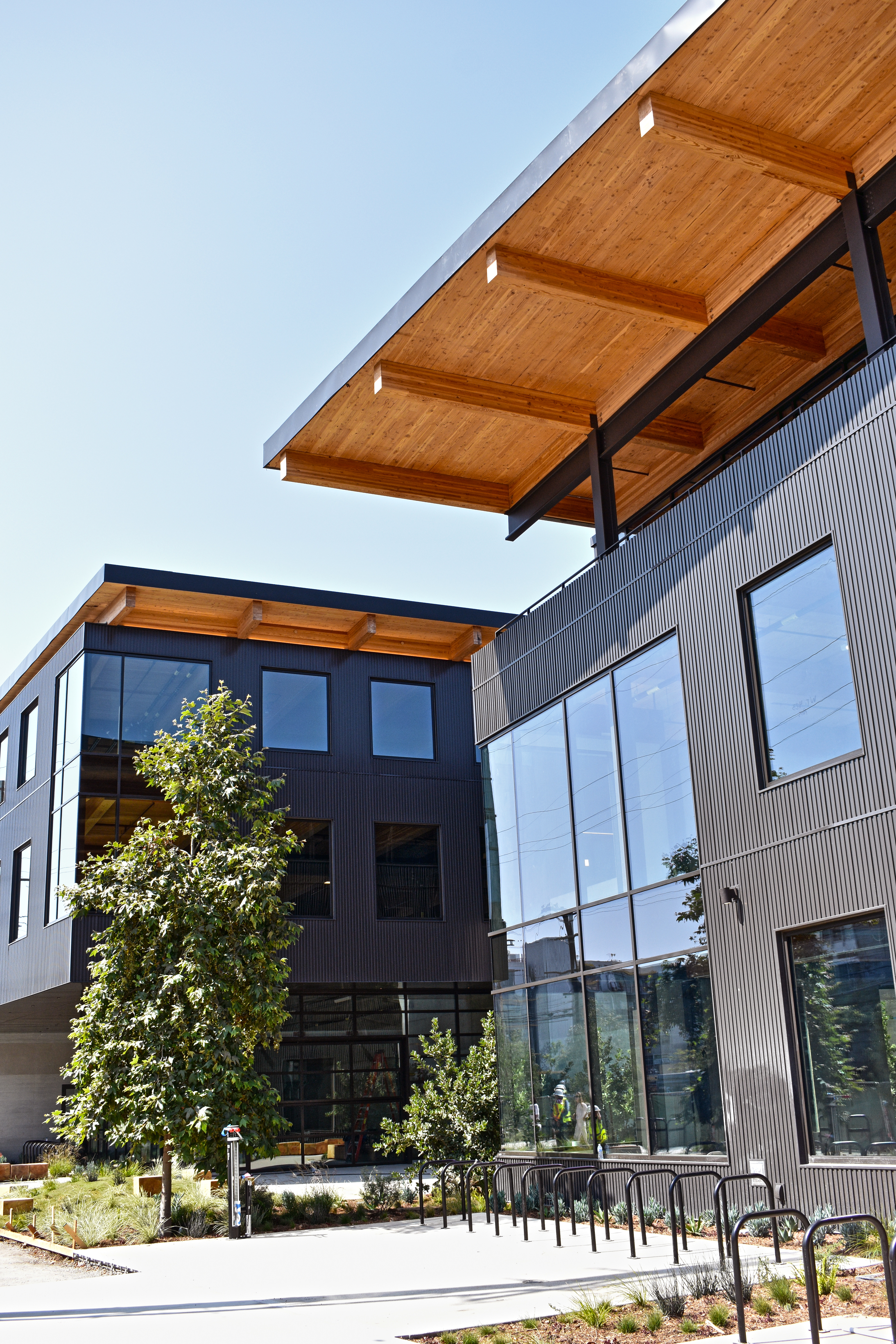
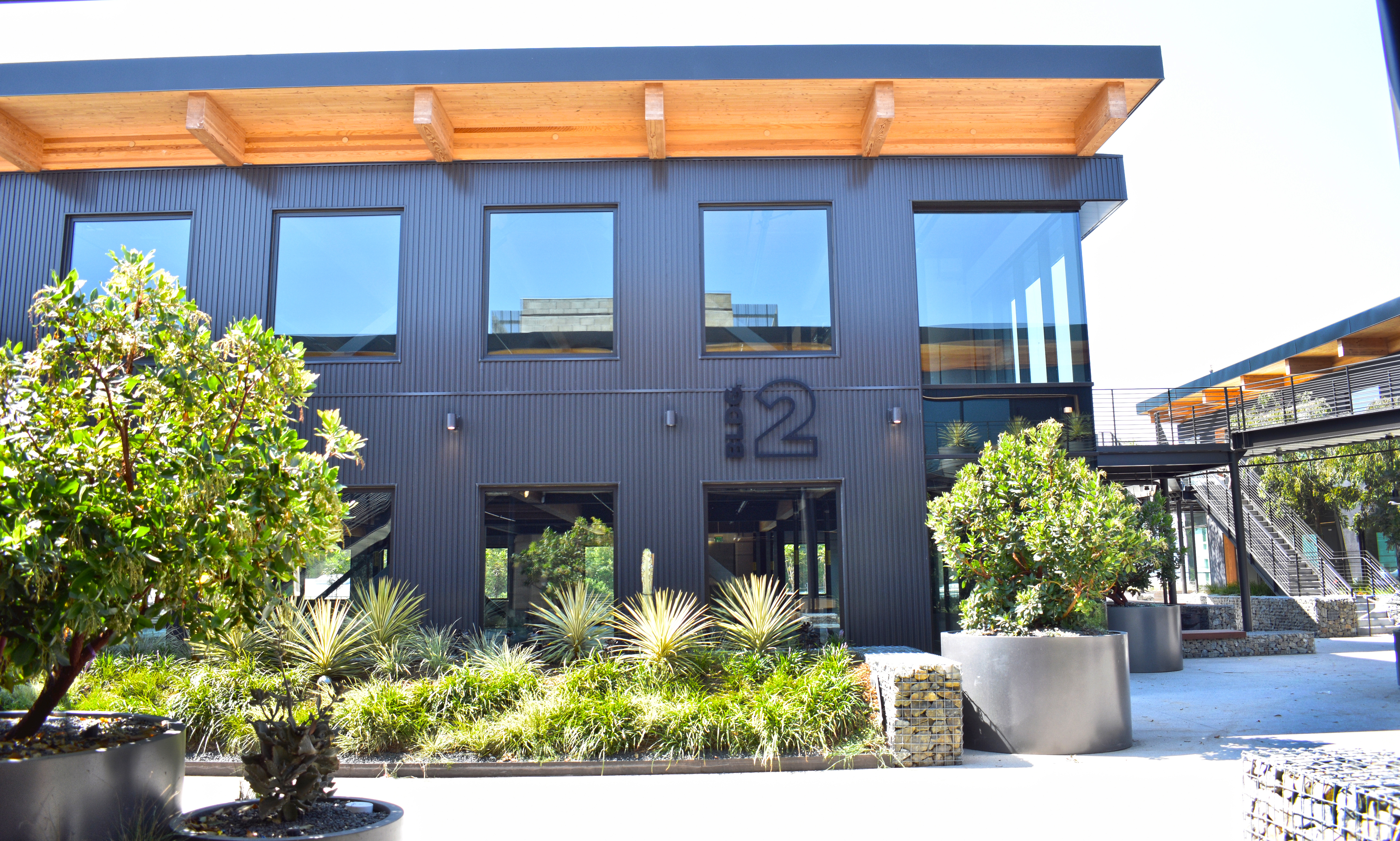
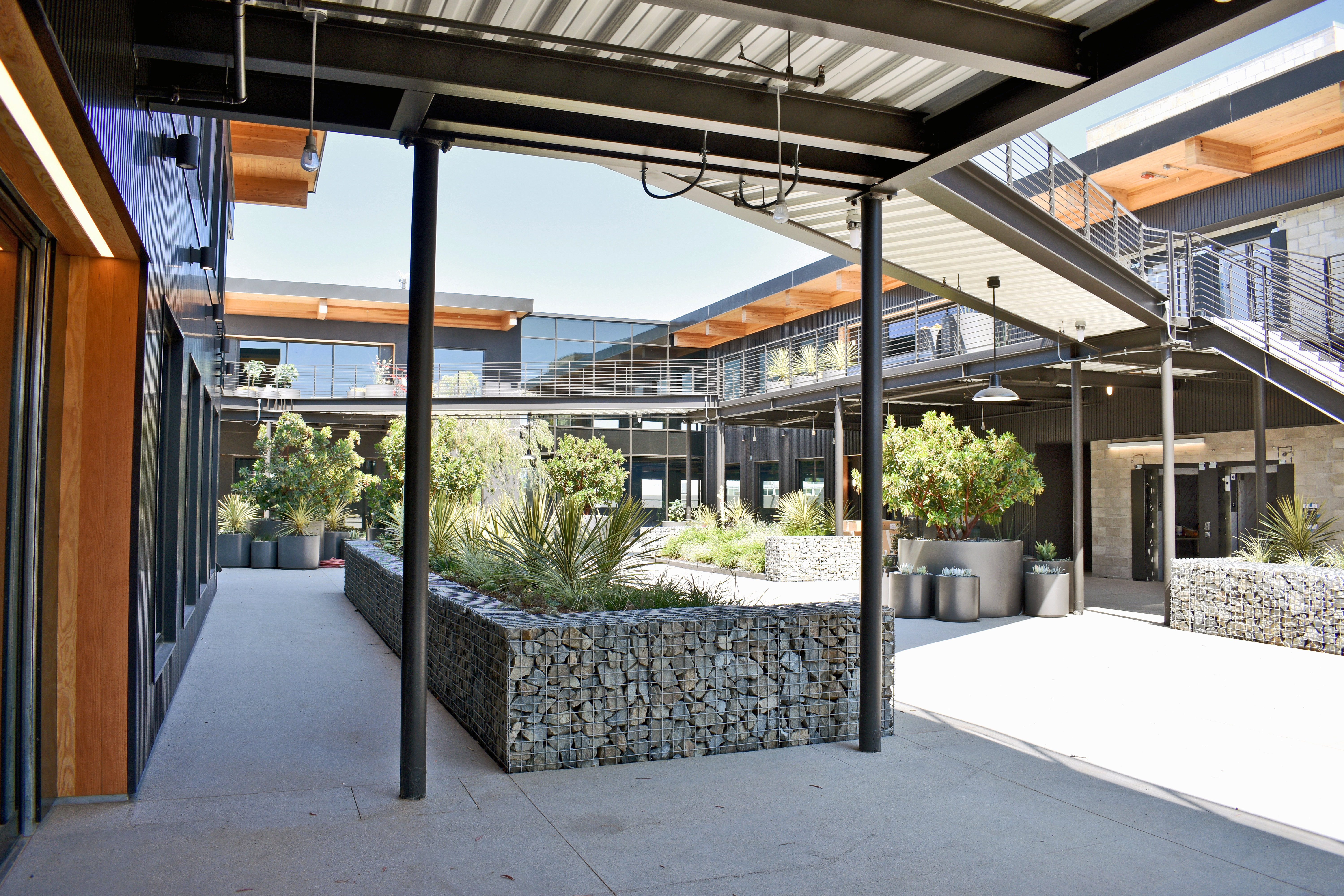
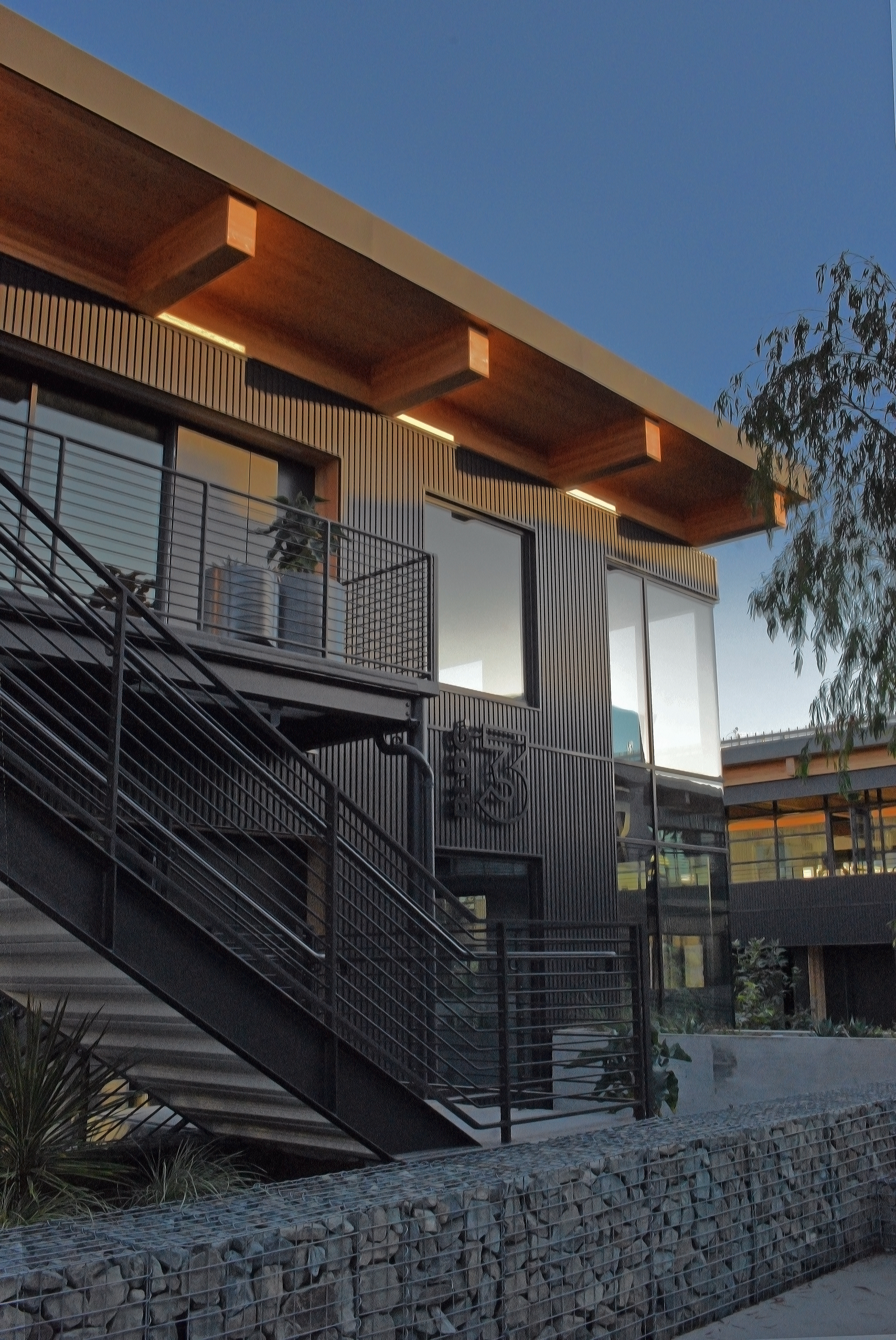
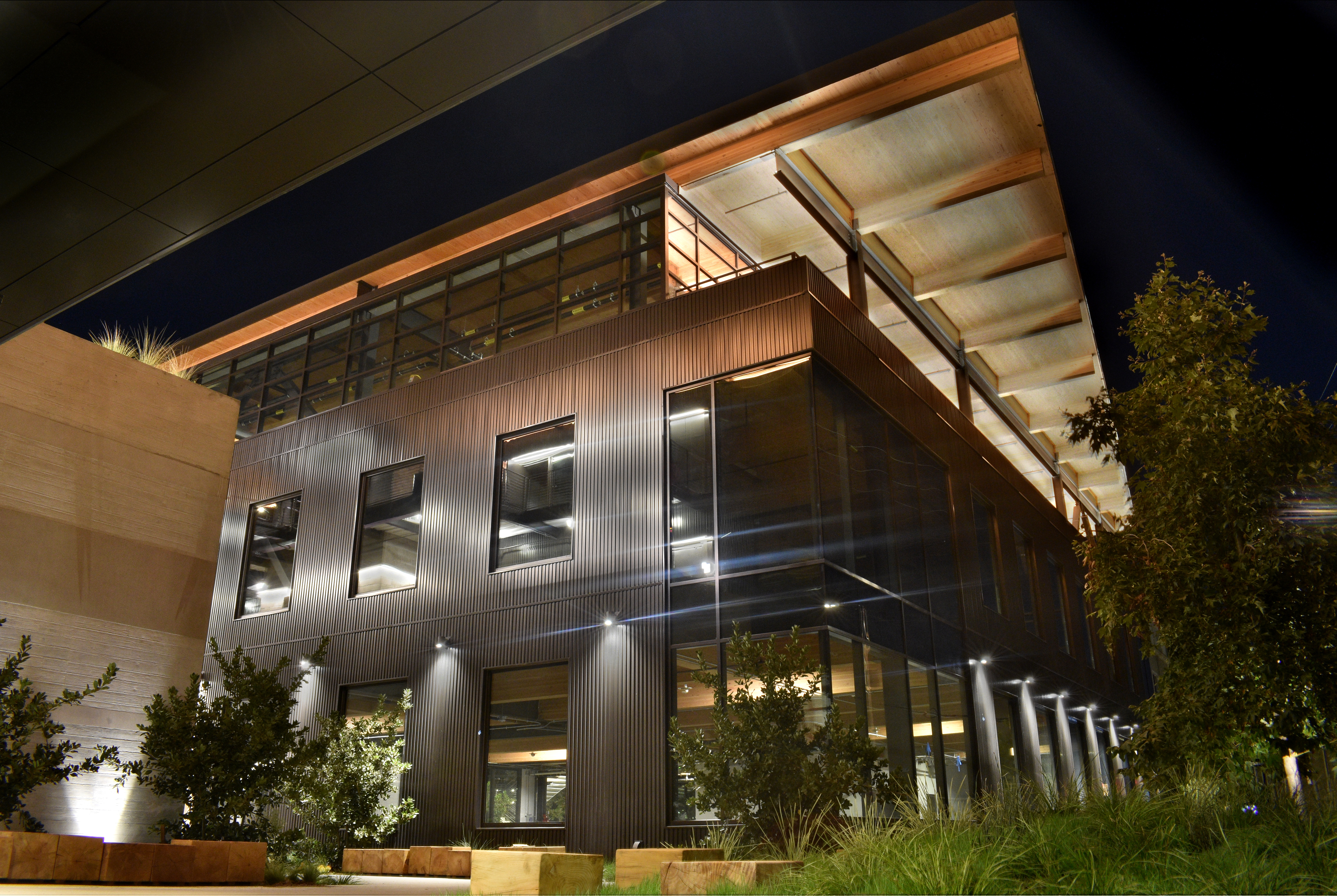

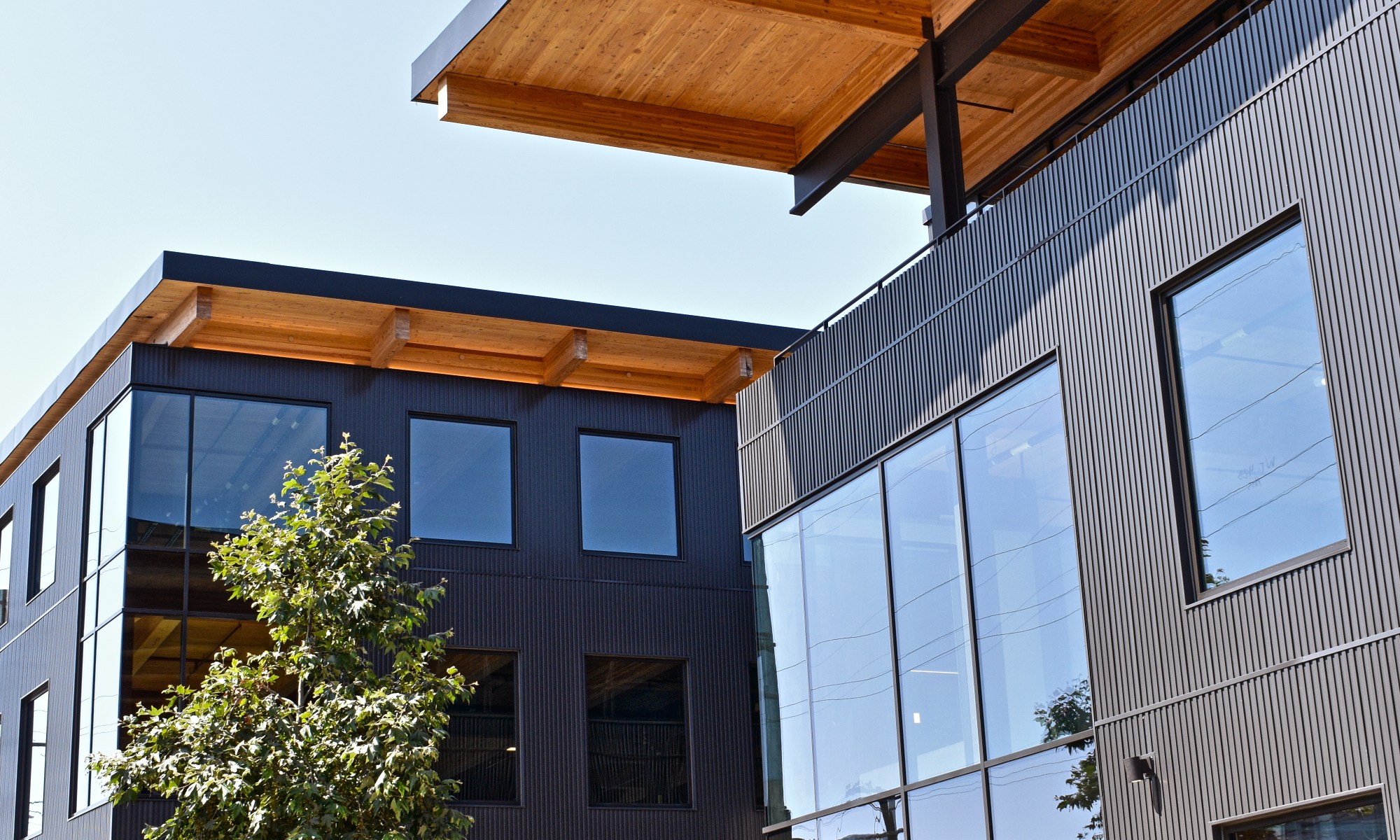
4204 Glencoe is a core and shell office space situated near Marina Del Rey, California. The project features three buildings: a standalone three-story building, and two two-story buildings (type IIIB) positioned atop a parking garage concrete podium (type IA). These buildings are interconnected on the second and third floors by exterior decks and bridges, which serve as the main circulation routes for the campus. The development encompasses approximately 123,000 square feet of office space (B occupancy) and an additional 80,000 square feet dedicated to parking.
Due to a site-specific plan, parking requirements are double the standard Los Angeles requirement of 4 spaces per 1,000 square feet of office space, resulting in a minimum of 500 vehicle parking spaces. To optimize the allowable Floor Area Ratio (FAR) of 1:1, we leveraged the city’s 20 percent bicycle parking offset, allowing us to replace one vehicle space with four bicycle spaces. This adjustment reduced the required vehicle spaces by 100 and introduced 400 bicycle parking stalls throughout the campus. To accommodate the 400 vehicle spaces on the campus without introducing a subterranean parking level, the team opted to utilize mechanical parking stackers for approximately half of the required parking.
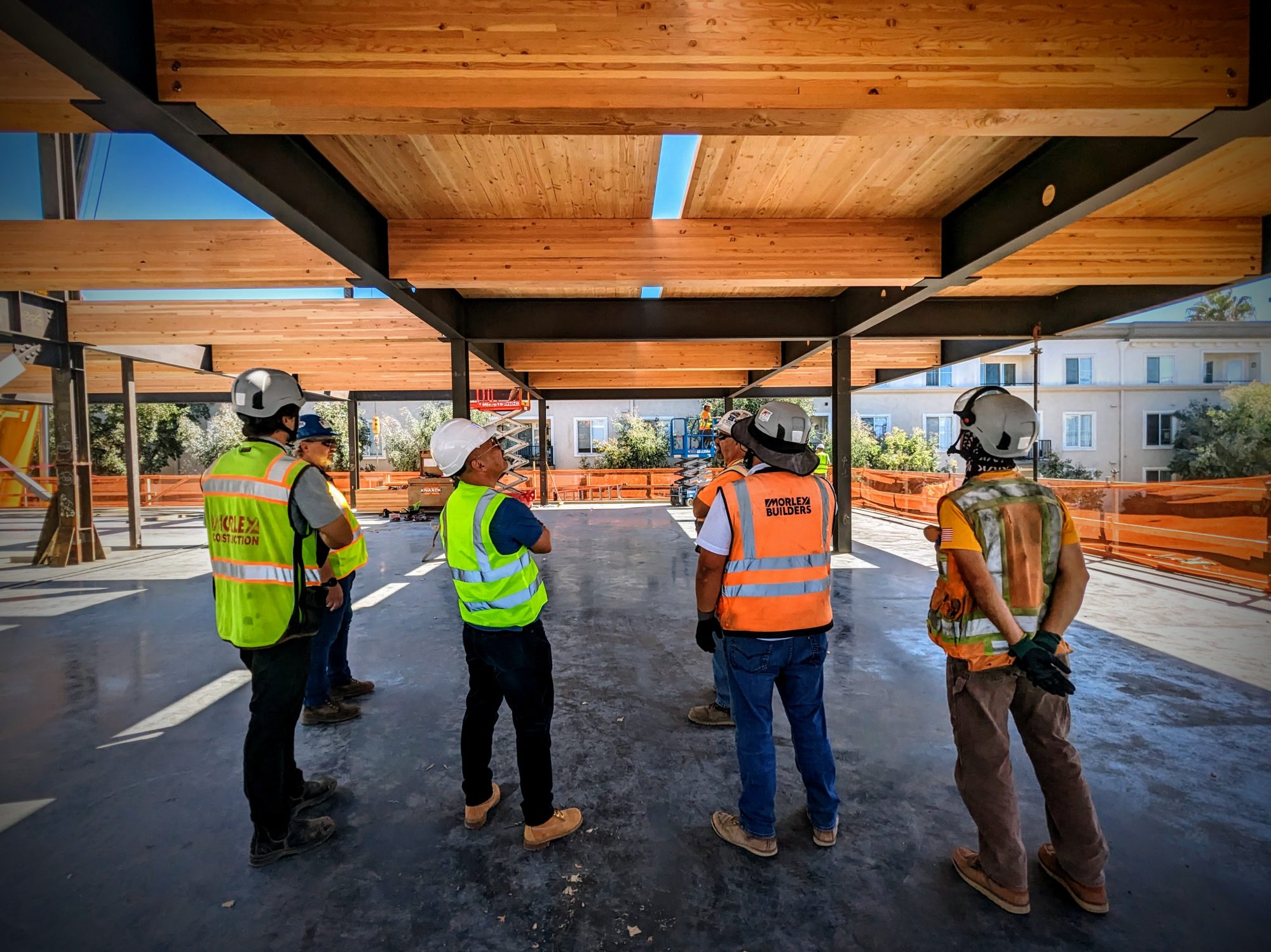
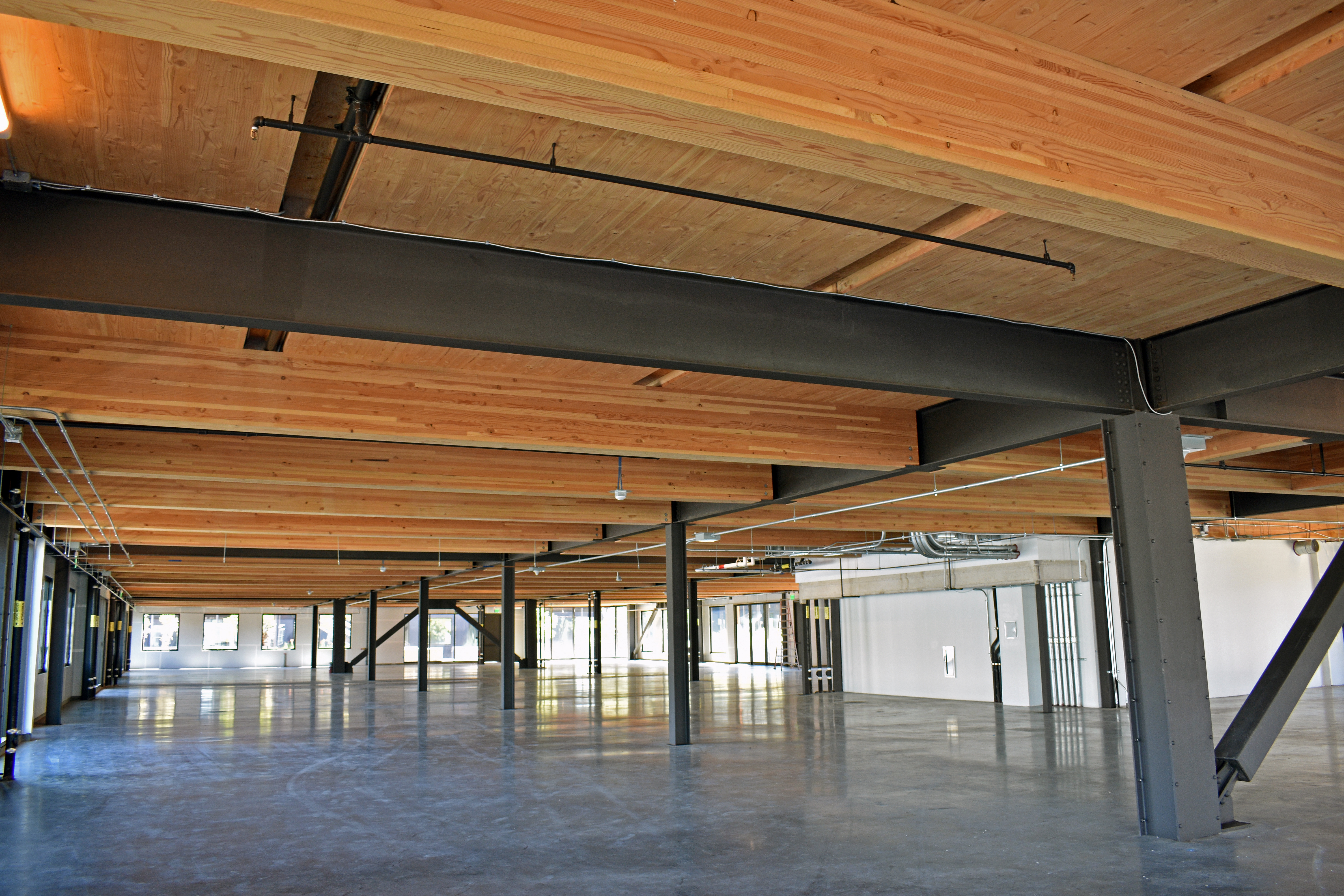
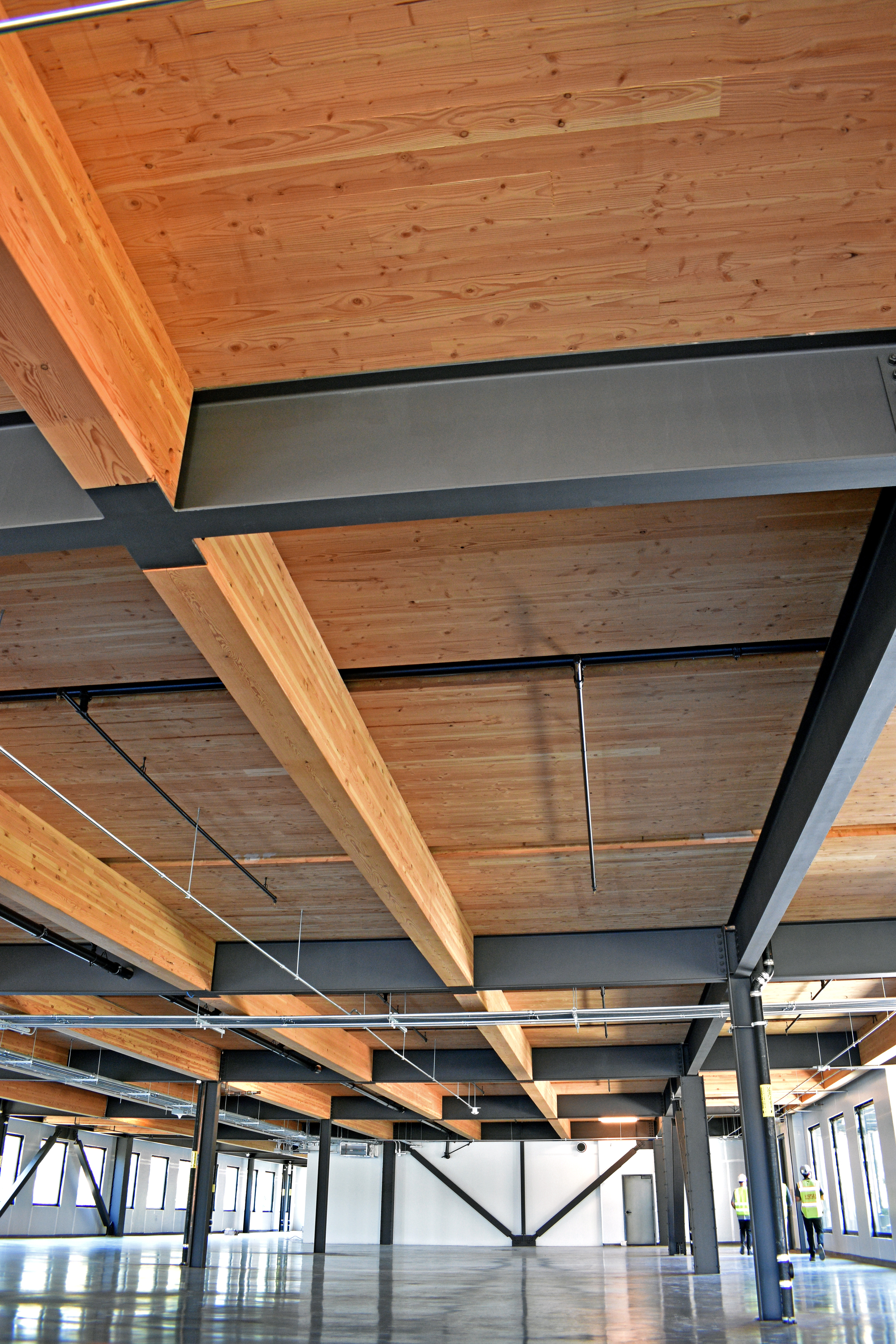
A key element of this project is the use of Cross Laminated Timber (CLT), chosen by the ownership group for its aesthetic qualities. By opting for CLT over traditional concrete slabs, the structural engineers achieved a roughly 40 percent reduction in the building’s overall weight. This allowed for smaller beams and columns and eliminated the need for a mat slab, enabling the use of spread footings. In addition to CLT, the project incorporates various construction materials, including mass timber glulam beams, steel beams, steel columns, steel brace frames, concrete over metal decks, post-tension concrete slabs, concrete shear walls, and concrete collector beams.
Design work for the project began in 2019. However, construction was delayed due to the COVID-19 pandemic. Work officially resumed in early 2022, with completion achieved in August 2024.
 SAUL S ARCHILA